NodeTool Cloud is in alpha. Direct films and run workflows in the browser, on your own keys.NodeTool Cloud is in alpha. Try it →

Product
StudioCloud (alpha)AgentsNode-based workflowsAI video editorAI image editorStoryboardsMCP serverSupported modelsDownloadSolutions
DevelopersMarketingGame developmentLocal-firstResearchersAll solutionsResources
TemplatesRecipesPresetsAd libraryCompare alternativesFAQOpenArt alternative: Every shot stays editable.
Generate with the video model you choose, then arrange, trim, and re-render single shots on a multi-track timeline in the same project.
- Open source
- Local and hosted models
- Your own provider accounts
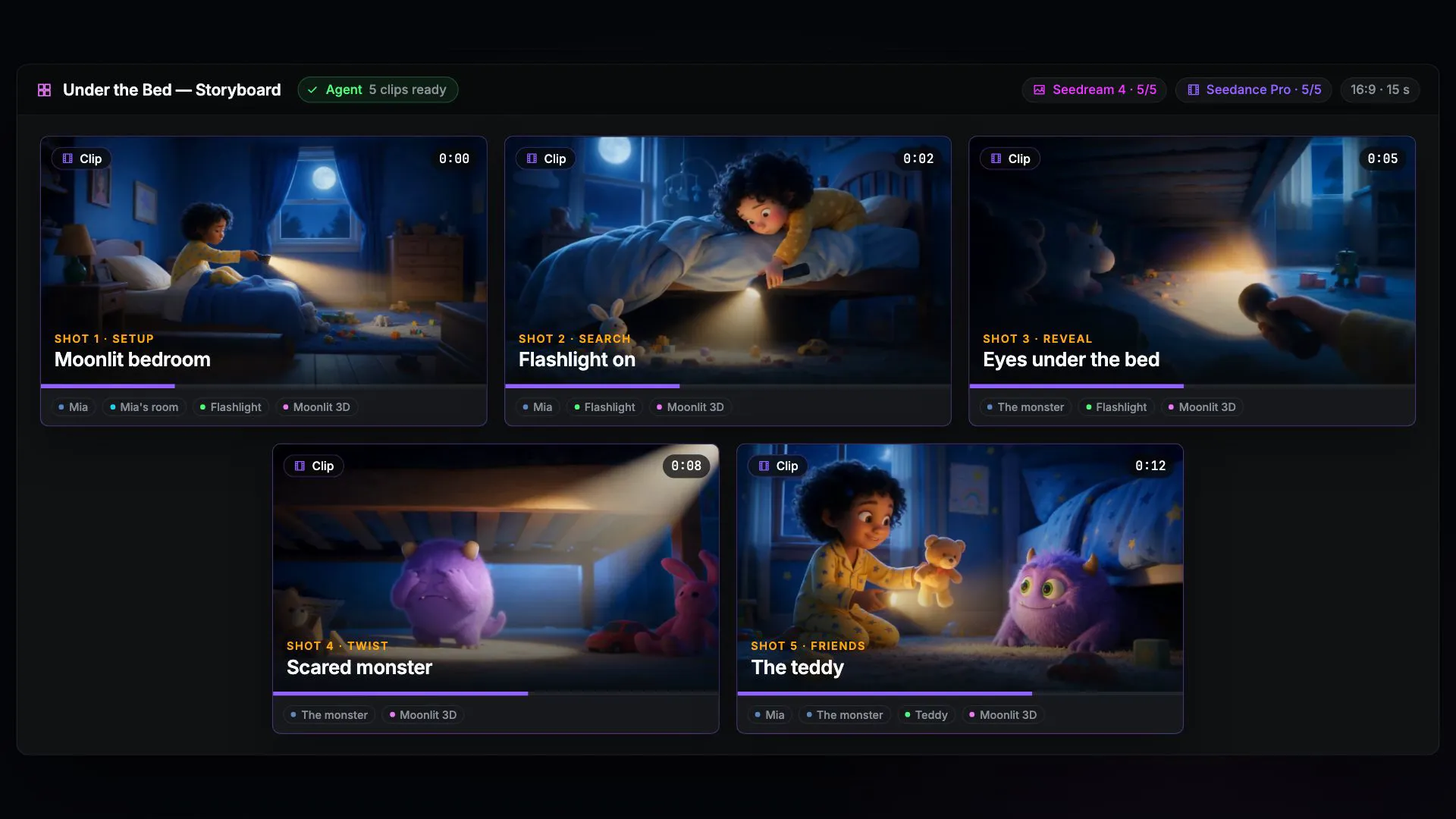
From generation to a cut you can change
Each stage has its own editor, and the agent works in the same editors you do.
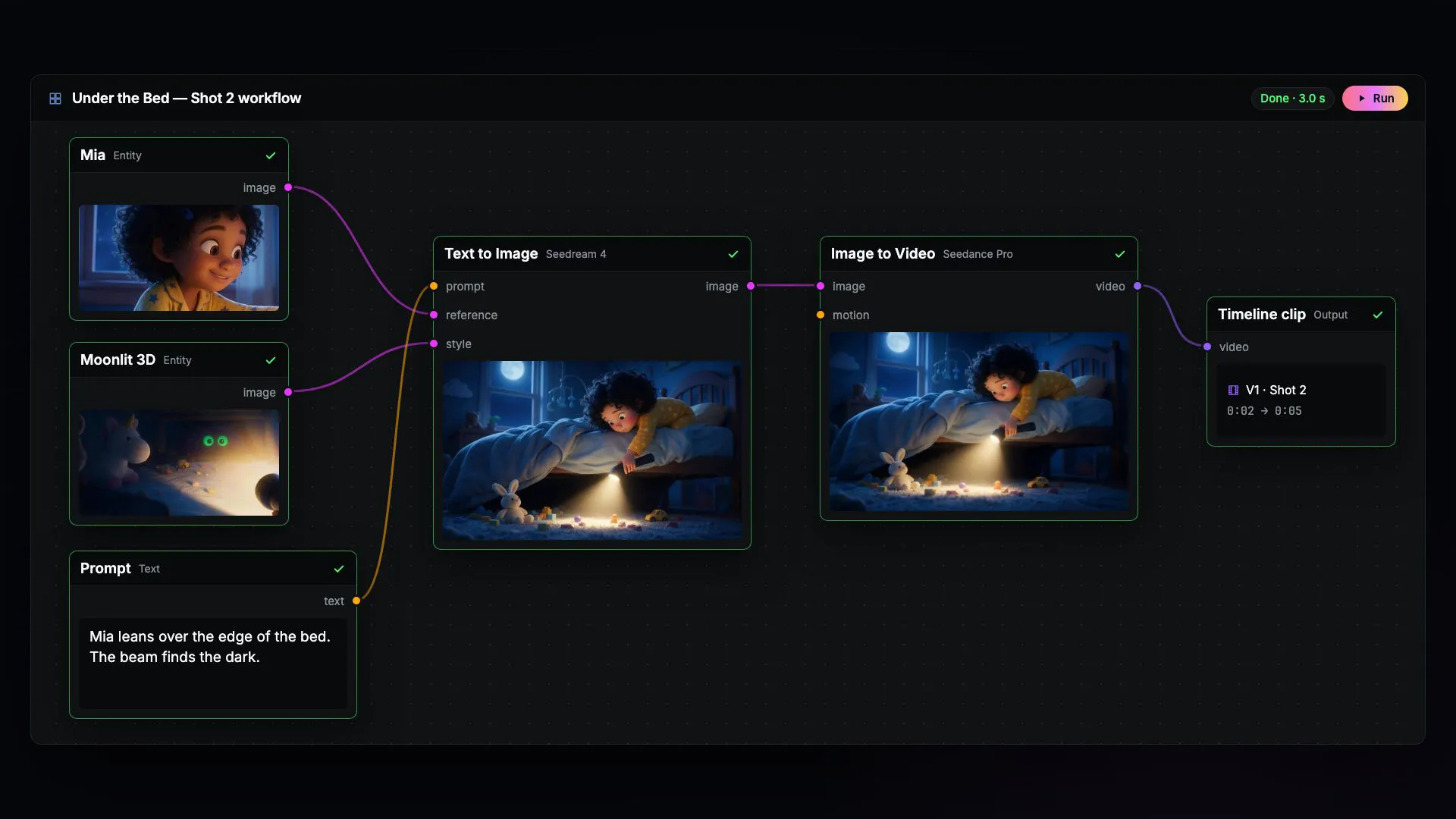
1. Build
Agent and node graph
Describe the film. The agent writes the workflow, and every step stays visible in the node editor.
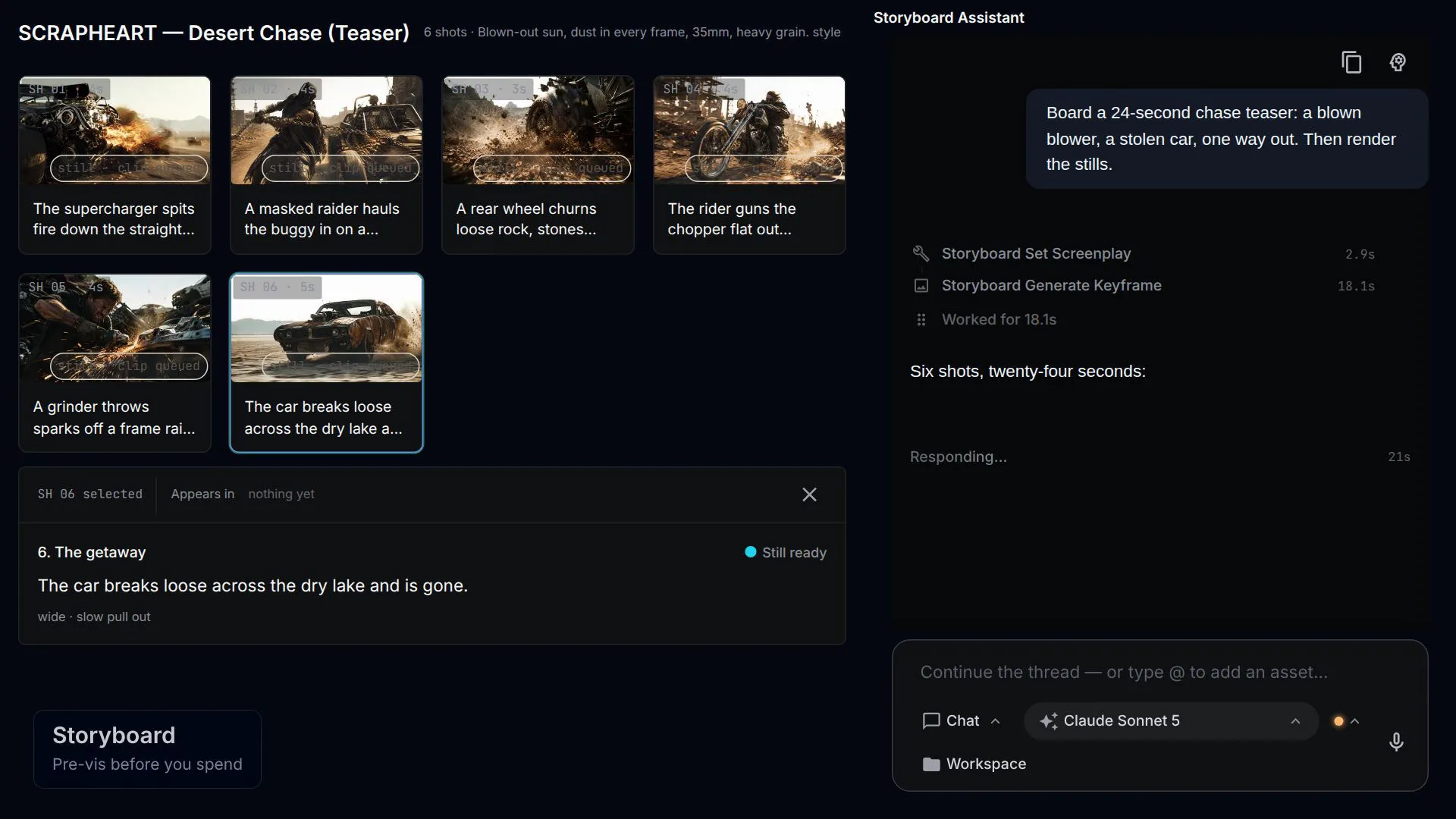
2. Generate
Shots and takes
Stills settle the look on the storyboard. Only the shots you approve become video.
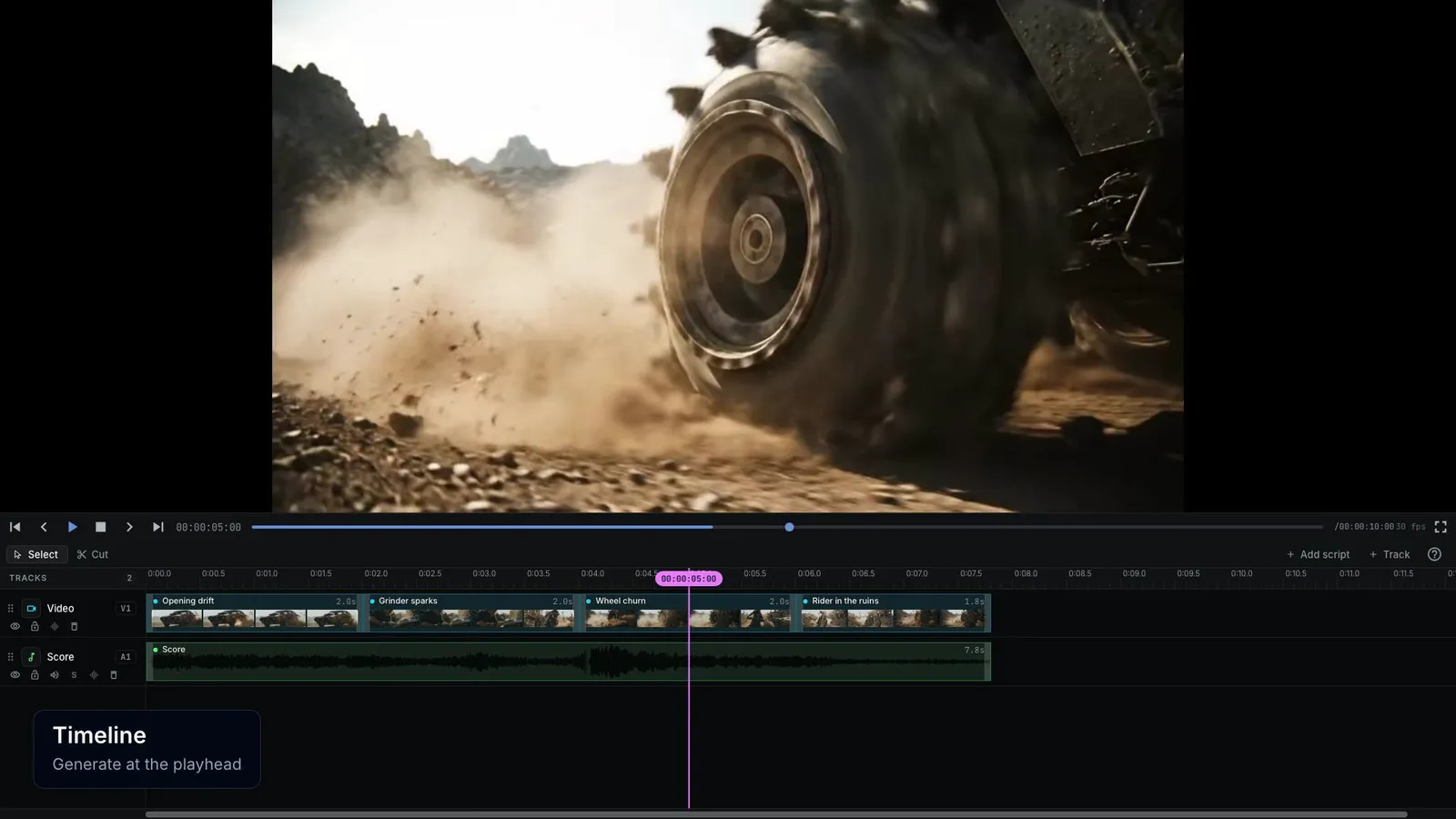
3. Finish
An editable cut
Arrange, trim, and layer clips on the timeline, or ask the agent to tighten the opening.
NodeTool vs OpenArt
OpenArt is a hosted image, video, and audio creation studio. NodeTool is an open-source creative workspace for image, video, audio, and text workflows, with agents, desktop or self-hosted deployment, and your own provider accounts.
| Feature | OpenArt | NodeTool |
|---|---|---|
| Video direction | OpenArt Director | Agents and editable storyboards |
| Media | Image, video, voice, and audio tools | Image, video, audio, and text workflows |
| Agent access | OpenArt MCP | MCP tools across project editors |
| Model billing | Subscription allowances and credits | Your connected provider accounts |
| Workspace deployment | OpenArt hosted studio | Studio, self-hosting, or Cloud alpha |
Check current capabilities and plan terms: OpenArt creative tools · OpenArt plans
Try an image workflow with inspectable outputs
Turn an idea into a written image prompt and a generated image. The prompt and image remain separate outputs you can inspect.
OpenAI and FAL API keys. The shipped graph uses GPT-5 mini and FLUX.1 Schnell.
- In Studio, open Write the Prompt, Then Make the Image from the template library.
- Connect OpenAI and FAL in provider settings. Each provider bills its own model calls.
- Enter an idea, such as a blue ceramic cup on a sunlit desk, and run the workflow.
- Inspect prompt_used and image. Change the idea, save the workflow, and run it again.
When OpenArt is the better choice
OpenArt fits creators who want its character library, editing tools, and Director in a managed service. NodeTool fits projects that need inspectable steps, local execution, or provider accounts controlled by the creator. Both offer agent integrations. The distinction is how the project and generation costs are managed.
What are the best OpenArt alternatives?
NodeToolRecommended
An open-source canvas for image, video, audio, and text that runs on your own keys — the video studio alternative you can host yourself.
macOS, Windows, Linux, or self-hosted · Open source (AGPL-3.0)
Kling AI
CompareCreative video platform with motion and reference controls
Pika
CompareHosted creative platform for video, images, and audio
Luma Dream Machine
CompareCreative workspace for image and video ideas
PixVerse
CompareGenerative media platform with production APIs
Dreamina
CompareHosted creative platform for images, video, and avatars
Frequently asked questions
- Does OpenArt only generate still images?
- No. OpenArt offers video, voice, audio, character tools, and Director. This comparison concerns project control and deployment, not a lack of video support.
- Can I use agents with OpenArt?
- Yes. OpenArt lists MCP access in its plans. NodeTool exposes its workflow and editing surfaces through MCP too.
- Do I need provider keys for NodeTool?
- The image starter uses OpenAI and FAL keys. Other workflows can use local models supported by Studio. OpenArt instead provides its hosted model access through its plans.
Keep the prompt beside the image.
Try a starter that exposes the written prompt and generated image as separate outputs.